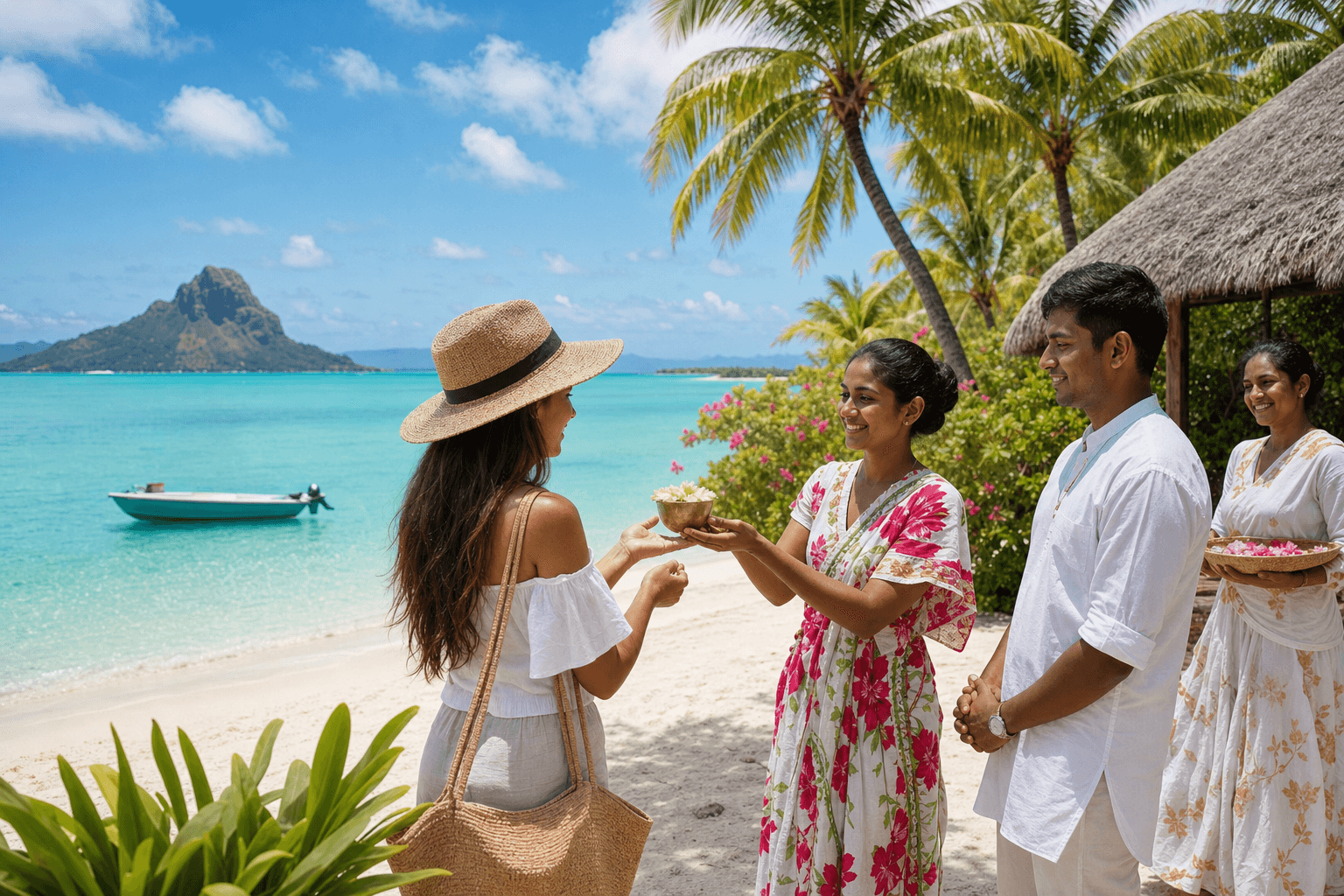
Part of what makes Mauritius so special is its people. This small island is home to a remarkable mix of cultures living side by side in harmony. Understanding a little about local customs will help you connect with your hosts and enjoy an even warmer welcome.
A blend of cultures and faiths
Over the centuries, people from India, Africa, China, and Europe settled in Mauritius, and their descendants have created a society that celebrates many traditions at once. Hindu temples, Christian churches, Muslim mosques, and Chinese pagodas often stand within a short distance of one another. Festivals from every community are enjoyed across the island, and this spirit of respect and coexistence is a source of great local pride.
Languages
You will hear several languages in daily life. Mauritian Creole is the mother tongue of most people and the language of the street, the market, and the home. French is widely spoken and used in the media, while English is the official language of government and education. Most people working in tourism speak good English and French, so communication is easy. Learning a few Creole words, such as bonzour for hello and mersi for thank you, will always bring a smile.
Greetings and everyday manners
Mauritians are friendly and polite. A handshake is the usual greeting, and a warm smile goes a long way. People tend to be relaxed about time in social settings, so patience and good humour are appreciated. It is polite to greet shopkeepers and drivers before getting down to business, and a little courtesy is always returned.
Visiting temples, mosques, and churches
Religious sites are open to respectful visitors, and a visit to the sacred lake at Grand Bassin or a colourful temple is a highlight for many. Dress modestly, covering your shoulders and knees, and remove your shoes before entering temples and mosques. Ask before taking photographs of people at prayer, keep your voice low, and follow any guidance from those around you. During major festivals, these sites can be busy and deeply moving to witness.
Dress and the beach
Casual, light clothing suits the climate, but away from the beach it is respectful to cover up a little, especially in villages, markets, and towns. Swimwear is for the beach and the pool, so throw on a shirt or a wrap when you walk to a shop or restaurant. Topless sunbathing is not part of local custom and is best avoided on public beaches.
Tipping and money
Tipping is not obligatory but is appreciated for good service. Rounding up a restaurant bill or leaving a little extra for a helpful guide or driver is a kind gesture. The local currency is the Mauritian rupee, and while cards are accepted in hotels and larger shops, cash is useful for markets, buses, and small eateries.
Markets and bargaining
Markets are lively and colourful, and gentle bargaining is expected at craft stalls, though not at food stalls where prices are usually fixed. Bargain with a smile and a light touch, treat it as friendly conversation, and be willing to settle at a fair price. If you are not going to buy, it is polite not to haggle hard.
Music and celebration
The heartbeat of Creole culture is sega, a rhythmic music and dance born from the island's history. If you get the chance to see a live sega performance, take it, and do not be surprised if you are invited to join the dancing. This spirit of shared celebration sums up the island beautifully.
A few things to remember
- Greet people warmly and use a few local words where you can.
- Dress modestly away from the beach and at religious sites.
- Remove your shoes and cover up before entering temples and mosques.
- Ask before photographing people, especially at worship.
- Carry cash for markets and small purchases.
Approach Mauritius with an open heart and a little respect, and you will find its people generous, welcoming, and genuinely happy to share their island with you.
Everything you need to plan an unforgettable Mauritius holiday. Read more island guides.